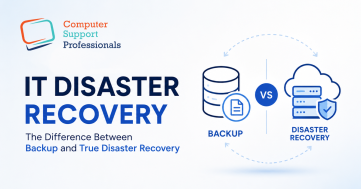


An Information Technology Disaster Recovery Plan (IT DRP) is a plan that supports any organization in difficult situations and emergencies. When an organization faces natural disasters such as floods, earthquakes, fires, or cyber-attacks, hacking, sudden power outages, or system failures, the organization can restore its IT systems and data with the help of IT DRP.
The main objective of this plan is to ensure that the business does not remain closed for a long time and that normal operations can begin as soon as possible. Along with this, it is also very important that the organization’s valuable data is not lost, because data loss can be a huge loss for the business.
In IT DRP, it is first seen which threats can harm the organization and which systems are the most important. Then backups are arranged for these systems so that if the original data is lost, work can be resumed from the backup. This plan also determines which employees will perform which responsibilities in an emergency and how they will communicate with each other.
In short, IT DRP protects the organization from panic during a crisis and helps restore systems and the business in an orderly manner.
Risk Assessment
Risk assessment means identifying potential risks in advance. In this stage, the organization tries to find out which problems could damage its IT systems. For example, risks such as floods, fires, earthquakes, sudden power outages, cyber attacks, hacking, or server failures can be included. When the organization understands these risks in advance, it can be better prepared to protect against them. This process also looks at which risks can be more harmful and how likely they are to occur. Risk assessment keeps the organization mentally prepared and protects it from sudden problems. With its help, management can take preventive measures in advance and keep the damage to a minimum.
Business Impact Analysis
Business impact analysis is the process of assessing the impact on a business if an IT system goes down for any reason. It looks at which systems are most critical and how much financial or administrative loss the organization could suffer if they were to fail. For example, if a database or online service goes down, users will be affected, and the organization’s reputation could be damaged. This analysis makes it easier to decide which systems should be restored first. Business impact analysis helps the organization set priorities so that time is not wasted in emergencies, and important tasks can be completed first.
Data Backup Strategy
Data backup strategy is a very important part of IT DRP. It means that the organization regularly saves copies of its data. If the original data is lost in a disaster, the information can be recovered with the help of backup. Backups can be taken on a daily, weekly, or monthly basis, depending on the needs of the organization. Data backups can be kept both online (cloud) and offline (hard drive or server). This strategy keeps the data safe and can protect the business from major losses. In the absence of data backup, the organization can lose valuable information forever, which can be very dangerous for the business.
Recovery Strategy
A recovery strategy is a plan for how systems and data will be restored after a disaster. It determines how long the recovery process should take and what resources will be used. For example, whether an alternative server will be used or data will be restored from a cloud system. The goal of a recovery strategy is to get the business back up and running in the shortest possible time. It also includes the roles and procedures of the technical team. A good recovery strategy helps the organization to function in an organized manner and enables a quick recovery in case of a disaster.
Roles and Responsibilities
It is very important to have clear roles and responsibilities. This means that each team member knows in advance what to do in an emergency. If responsibilities are not clear, confusion can arise during a crisis, and valuable time is lost. For example, who will restore data backups, who will notify management, and who will contact customers. When everyone knows their job, work gets done faster and better. This not only helps systems recover faster but also maintains discipline within the organization. Clear responsibilities strengthen teamwork.
Communication Plan
A communication plan is a process for how information will be communicated during an emergency. It involves employees, management, IT teams, and customers. If information is not provided in a timely and accurate manner, rumors can spread, and trust can be lost. The communication plan determines how contact will be made, such as by email, phone, or text message. The goal is to ensure that everyone has a clear understanding of the situation and does not cause panic. A strong communication plan protects the organization’s reputation and maintains trust.
Testing and Updates
It is not enough to just create a disaster recovery plan, but it is also necessary to test and update it from time to time. Testing shows whether the plan is really working or not. If any part is deficient, it can be corrected in time. Similarly, technology keeps changing, so it is also necessary to update the plan according to new changes. Following the old plan can be harmful. Testing and updates always keep the organization ready and help it deal with any new difficulties.
Alternate IT Infrastructure
An alternate IT infrastructure means that if the main server or system fails, work does not have to stop. For this, the organization should have an alternate server, data center, or cloud system. This ensures business continuity. For example, if a server in one location fails, work can be immediately transferred to another server. With this arrangement, users do not notice much difference, and the organization’s service continues. Alternate infrastructure protects the organization from major financial losses and reputational damage.
Conclusion
A strong IT Disaster Recovery Plan is essential for every organization, especially in today’s digital era, where most of the work is done through computers and the internet. This plan helps to protect the organization’s important data and prevents major losses in the event of any sudden problem. If a natural disaster, system failure, or cyber-attack occurs, thanks to IT DRP, the organization can work under a clear plan instead of panicking.
With the help of this plan, the business resumes as soon as possible, and the trust of the customers is also maintained. In addition, it also protects the organization from financial loss, loss of time, and damage to reputation. A well-prepared disaster recovery plan not only provides solutions to current problems but also prepares the organization for future threats. That is why every organization must prepare an effective and modern IT Disaster Recovery Plan and update it from time to time.