When a provider quotes you a full IT security package, the line items can read like alphabet soup: EDR, MDR, SIEM, SOC, without much explanation of what any of it does for your business, or whether you need all of it. This guide breaks down IT security services in plain English: what each layer of a full package covers, how much it typically costs in Australia, and how to tell whether a provider's quote genuinely protects your business or just ticks boxes.
1. Why a Full Security Package Means More Than Antivirus
A decade ago, IT security mostly meant antivirus software and a firewall. That's no longer close to enough. The Australian Cyber Security Centre recorded a 23% increase in cybercrime reports from small businesses in the 2024-25 financial year, and the average cost of a cyber incident for an Australian SMB now sits somewhere between $46,000 and $56,600, depending on the source and year measured.
Modern threats target multiple points at once email, endpoints, cloud accounts, and staff themselves which is why a genuine security package is layered, not a single tool.
2. The Six Layers of a Full IT Security Package
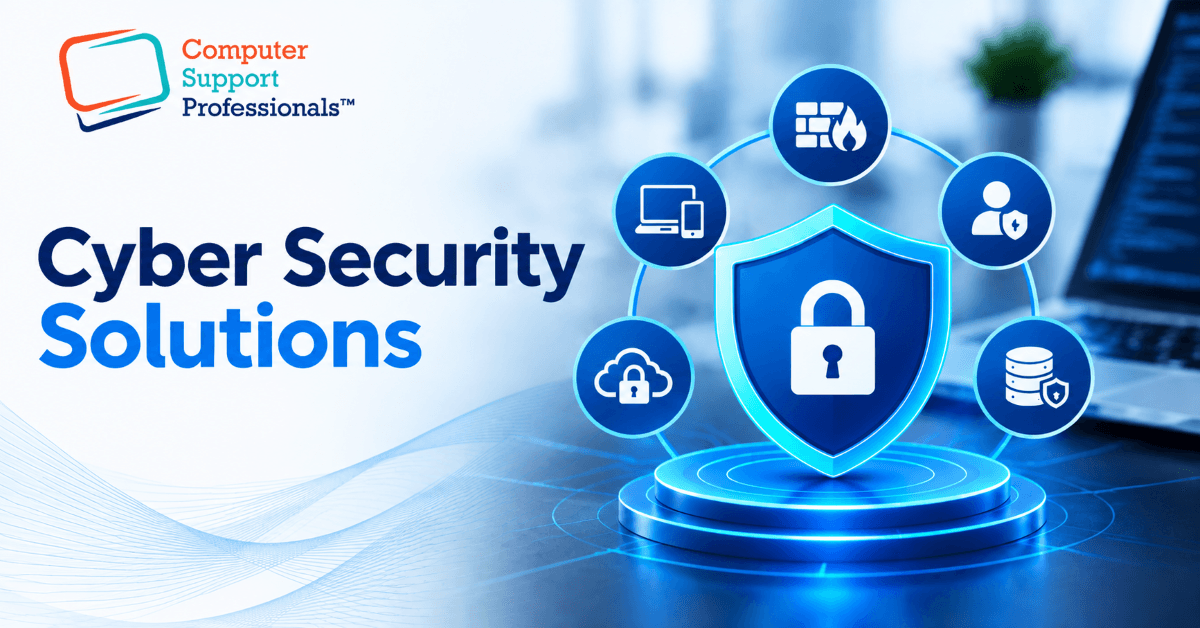
A properly scoped security package typically covers:
- Perimeter and network security - managed firewalls and network monitoring, controlling what gets in and out.
- Endpoint protection - software on every laptop, desktop, and server watching for suspicious behaviour.
- Detection and response - the layer that notices something's wrong and acts on it, whether automated or human-led.
- Identity security - multi-factor authentication (MFA) and access controls, so a stolen password alone isn't enough to get in.
- Testing and validation - vulnerability scans and penetration tests that check the other layers’ work.
- People - security awareness training, because a large share of breaches still start with a convincing email.
- Each layer covers a different failure mode. Skipping one doesn't just weaken that layer - it can undermine the value of the others.
3. What 24/7 Monitoring Actually Means
24/7 monitoring is one of the most common phrases in a security quote, and one of the most inconsistently delivered. In practice, it can mean either:
- Automated alerting only - software flags anomalies and sends a notification, but no one reviews it until business hours.
- A genuine security operations centre (SOC): a team actively watching infrastructure, endpoints, and cloud environments around the clock, triggering alerts and responding in real time.
The difference matters enormously if an incident happens at 2 am on a Saturday. Before accepting 24/7 monitoring as a line item, ask specifically whether it means live human response or automated alerts reviewed the next business day.
4. EDR vs MDR vs SIEM, Explained Simply
These three acronyms show up constantly and get used almost interchangeably; they're related, but distinct:
- EDR (Endpoint Detection and Response) is software installed on individual devices that watches for suspicious behaviour and can isolate a compromised device automatically. Think of it as a smart guard posted at every door.
- SIEM (Security Information and Event Management) is a centralised system that pulls in log data from across your whole environment and correlates it to spot patterns a single tool would miss. Think of it as the control room watching every camera feed at once.
- MDR (Managed Detection and Response) is not a tool but a service: a team of analysts who use EDR, SIEM, and other data sources to actively hunt for and respond to threats around the clock.
EDR protects a device, SIEM gives visibility across everything, and MDR is the human team turning that visibility into action.
5. Vulnerability Scanning vs Penetration Testing
These two are often bundled together in a quote but test very different things:
- Vulnerability scanning is automated software that checks your systems against known weaknesses and produces a report. It's fast, relatively cheap, and should run regularly, not just once a year.
- Penetration testing is manual. A skilled tester actively attempts to exploit those weaknesses the way a real attacker would, showing what a vulnerability could lead to.
A full package generally includes frequent automated vulnerability scanning plus periodic (commonly annual, or after major system changes) penetration testing. The scan finds the cracks; the test shows how deep they go.
6. The Essential Eight: Where It Fits In
The Essential Eight is the Australian Signals Directorate's baseline cybersecurity framework of eight controls including patching, MFA, and regular backups, designed to substantially raise the bar for attackers. It isn't legally mandated for most private businesses, but it's increasingly expected by cyber insurers, larger corporate clients, and government-adjacent contracts, and Essential Eight Maturity Level 2 has become a practical baseline many insurers expect before offering full ransomware coverage.
A genuine full security package should be mapped clearly onto the Essential Eight controls, and a good provider should be able to tell you exactly where your business currently sits against each one.
7. What a Full Security Package Costs in Australia
Pricing varies significantly by business size and the depth of coverage, but rough Australian benchmarks in 2026 look like this:
| Tier | What's Included / Typical Cost |
| Basic | Business-hours helpdesk, standard monitoring - roughly $100-$130 per user/month |
| Mid | Adds EDR, extended-hours coverage - roughly $150-$180 per user/month |
| Premium | MDR, Essential Eight baseline controls, genuine 24/7 live response - can exceed $250 per user/month |
For a mid-sized business (around 25 users) with full security and backup coverage, total monthly spend commonly lands between $3,500 and $6,800 once licensing and security tools are included. The single biggest cost driver is the service tier specifically, whether 24/7 means automated alerts or a live SOC team.
8. A Simple Package Checklist
- Managed firewall and network monitoring in place
- EDR deployed on every endpoint, not just servers
- Genuine detection and response capability confirmed whether automated or human-led
- Multi-factor authentication enforced across all business systems
- Vulnerability scanning running on a regular schedule
- Penetration testing conducted at least annually or after major changes
- Security awareness training delivered to all staff, not just IT
- Clear mapping to the Essential Eight, with a documented maturity level
Conclusion
A full IT security package isn't one product; it's six layers working together, from the firewall at your perimeter through to the training your staff receive. Acronyms can make it sound more complicated than it is: EDR protects devices, SIEM gives visibility, MDR puts a human team behind both, and vulnerability scanning plus penetration testing confirms it's all actually working. The real risk isn't the cost of a proper package; it's discovery, after an incident, that 24/7 monitoring only ever meant an email nobody reads until Monday.
If you're not sure exactly what your current IT security setup includes or whether it would hold up against a real incident, cspro.com.au can review your environment against the Essential Eight and show you precisely where the gaps are. Get in touch for a free security assessment.