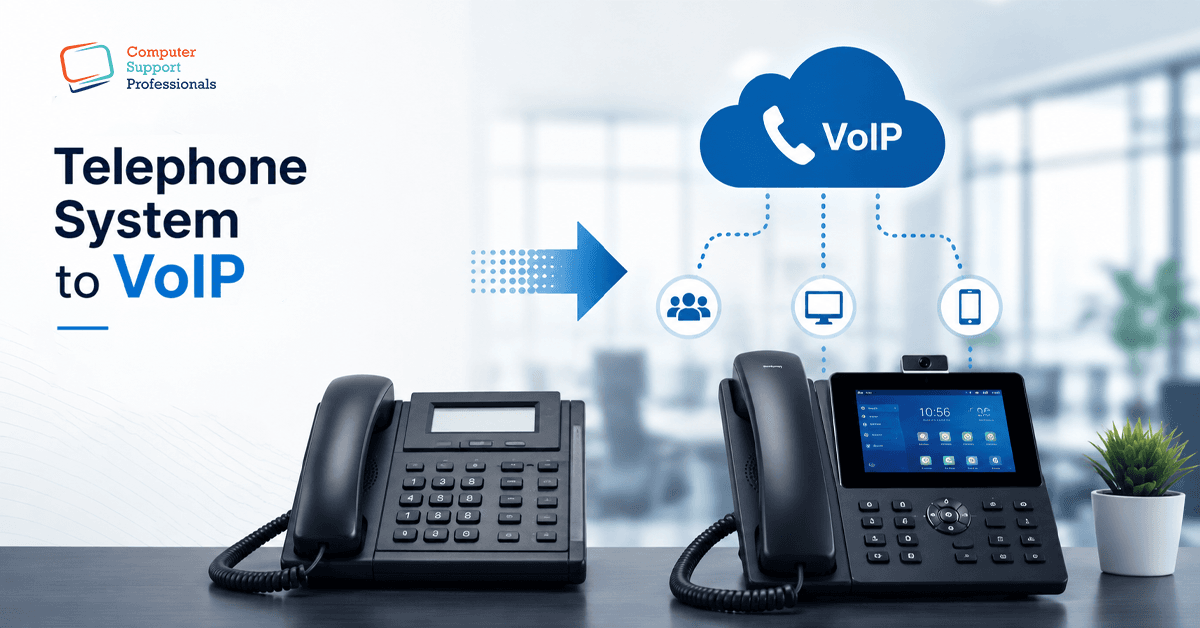
Converting an old telephone system to VoIP is genuinely worth doing for most businesses, but the sales pages promising a switch in minutes describe a single home phone, not a live, multi-line office PBX your reception team relies on every day. This guide gives the realistic version: the actual methods available, honest costs, and a migration path that doesn't leave your business without phones halfway through a Tuesday.
Why Converting a Legacy Phone System Is a Bigger Project Than Provider Ads Suggest
A single home phone can genuinely switch to VoIP in minutes. A multi-line office PBX serving several departments, an auto attendant, and years of accumulated configuration is a different scale of project entirely. It's still very achievable, and the outcome is usually worth it, but treating it as a proper project rather than a quick swap is what determines whether the transition is smooth or disruptive.
Method One: Full Replacement
This means retiring your existing PBX entirely and moving to a cloud-based VoIP system from scratch. It's the cleanest long-term option, giving you full access to modern features without legacy hardware constraints. Still, it also means the most upfront reconfiguration: call routing, extensions, auto-attendants, and integrations all need to be set up fresh rather than carried over automatically.
Method Two: SIP Trunking Gateway
This method keeps your existing PBX in place but connects it to the internet using SIP trunking instead of traditional phone lines. It's a genuinely good option if your PBX is relatively modern and still meeting your needs, letting you gain VoIP's cost and flexibility benefits without replacing hardware you've already invested in. The trade-off is you're still bound by whatever limitations your existing PBX has.
Method Three: Hybrid Migration
A hybrid approach runs your existing PBX and a new VoIP system in parallel during a transition period, gradually moving departments, extensions, or locations across on a staged timeline rather than all at once. This is genuinely the lowest-risk option for a business that can't tolerate any disruption, though it takes longer overall and means managing two systems simultaneously for a period.
Choosing the Right Method for Your Business
| Factor | Full Replacement | SIP Trunking Gateway | Hybrid Migration |
| Best for | Ageing PBX, ready for a clean start | Modern PBX still meets your needs | Businesses that can't tolerate disruption |
| Upfront effort | Highest | Moderate | Moderate, spread over time |
| Risk of disruption | Moderate, one cutover event | Low | Lowest |
| Overall timeline | Fastest | Fast | Longest |
What This Actually Costs
Realistic budgeting should include more than just the new VoIP plan cost. Depending on your chosen method, expect to budget for: VoIP handsets or softphone licences per staff member, professional configuration of call routing and auto attendants, number porting (which can take longer than expected and occasionally incurs provider fees), staff training time, and, for a hybrid approach, running two systems in parallel for a period. A generic per-user monthly VoIP price rarely reflects the full, realistic cost of the project.
What Happens to Your Existing PBX Hardware
If you're fully replacing your PBX, existing hardware is typically decommissioned, though a SIP trunking gateway approach can extend its useful life if it's still in reasonable condition. Many businesses give too much weight to the sunk cost of existing hardware when making this decision. A PBX nearing the end of its life or already causing reliability issues is rarely worth preserving purely to avoid feeling like a wasted investment.
A Realistic Migration Timeline
- Weeks 1-2: Network readiness assessment and method selection (full replacement, SIP trunking, or hybrid).
- Weeks 2-4: Number porting initiated (this step often has the longest lead time, so start it early).
- Weeks 3-5: New system configuration - call routing, auto attendants, extensions.
- Weeks 5-6: Staff training and a test period running alongside the existing system where possible.
- Week 6 onward: Full cutover (or gradual staged rollout for a hybrid approach), with close monitoring in the first two weeks.
- This is a realistic range for a mid-sized office; a smaller single-site business can often move faster, while multi-site businesses should plan for longer.
Minimising Disruption During the Switch
- Start number porting as early as possible, since delays here are the most common cause of migration timelines slipping.
- Schedule the final cutover for a lower-volume day or time, not during your business's busiest period.
- Keep a fallback plan (such as mobile forwarding) ready in case the cutover hits an unexpected issue.
- Train staff on the new system before cutover day, not on the day itself.
- Monitor call quality and routing closely for the first two weeks, when configuration issues are most likely to surface.
How CSPRO Can Help
Converting a legacy phone system is a project best planned with someone who's done it before, not figured out live on cutover day. CSPRO helps Australian businesses through:
- A network readiness assessment and honest recommendation on the right migration method for your specific PBX and business.
- Realistic cost and timeline planning, including number porting management.
- Migration execution with minimal disruption, including staff training and post-cutover monitoring.
If you're planning to convert your business phone system to VoIP, CSPRO can assess your current setup and build a realistic migration plan designed to minimise disruption.
Conclusion
Converting an old telephone system to VoIP is a genuinely worthwhile project for most businesses, but it's a project, not a quick swap. Choosing the right method for your specific PBX, budgeting realistically beyond the headline plan price, and planning a timeline that protects your business from disruption are what determine whether the switch goes smoothly.
If you're planning this migration, CSPRO can assess your current phone system and build a realistic plan around your business, not a generic sales timeline.