
Nowadays, the Internet and Firewalls for network security have become an important part of our daily lives. People use the Internet for various tasks at home, office, school, bank, and business. With its help, it has become very easy to get information, shop online and contact others. On the other hand, the Internet does come with a few drawbacks, such as the possibility of being hacked, infected with viruses, or having one’s data stolen. It is possible for these risks to damage both personal information and machines.
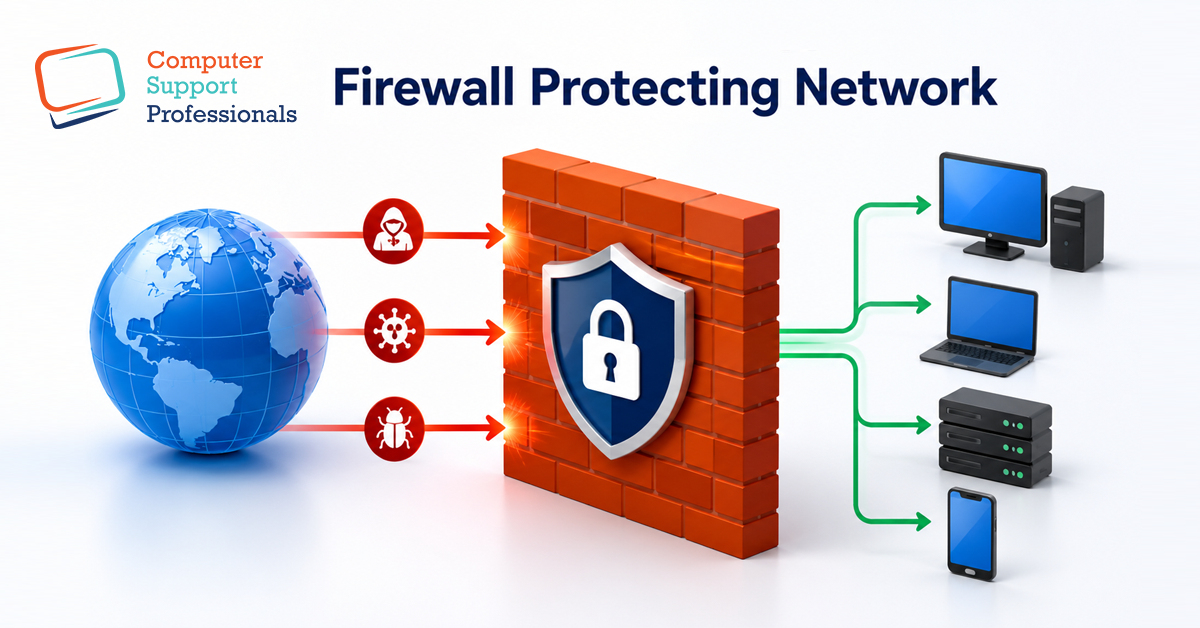
A firewall is used to prevent these risks. A firewall is a security device that works as a wall between your computer and the Internet. It blocks suspicious and hazardous data and permits only secure information. A firewall protects computers, mobiles and networks from cyber assaults.
How does a firewall work?
A firewall is a security device that protects a computer, mobile phone or a whole network from internet dangers. It functions as a guard . It monitors all the data that comes in and out . When information or data flows to your computer or network from the Internet, the firewall inspects it first. If the data is secure the firewall allows it in . If the data contains a threat , virus or suspicious activity the firewall blocks it instantly.
A firewall works according to specific rules and security settings. For example, it allows only trusted websites and applications so that the user can use the Internet safely. If an unknown or suspicious website tries to connect, the firewall blocks it. Similarly, if a hacker’s IP address is considered dangerous, the firewall blocks all requests from that address so that the network is safe.
A firewall also closes unnecessary ports. Ports are the paths through which data enters the computer. If these paths remain open, hackers can easily attack. A firewall keeps only the necessary ports open and closes the rest to prevent illegal access.
In addition, a firewall also recognises data containing viruses and malware. If any malicious file or program tries to enter the computer, the firewall stops it. And computer data remains safe, and the system is protected from damage.
In today’s era, a firewall is very important for every small and large organisation. It not only protects against hacking and viruses, but also protects personal information, banking data, and important files. That is why a firewall is called the first protective wall of network security.
Importance of a firewall on the perimeter of the network
The outer part of the network, called the “perimeter,” is where the internal network of a home, office, or company connects to the Internet. This part is very important because all online information flows in and out through this route. Hackers and cybercriminals also mostly try to enter the network from this point. That is why this part is considered the most dangerous.
A firewall acts as a strong guard at this point. It checks every incoming and outgoing data to ensure that only safe information is allowed in. The firewall quickly stops whenever any suspicious or risky data attempts to enter the network. This is to prevent unlawful access and to defend against hacker assaults.
A firewall also protects the sensitive information of companies and institutions. For example, banking records, customer data, passwords, and important files are protected from hackers. Cyber criminals can simply steal information or harm the whole system without a firewall.
Each and every company and organisation in our contemporary day has realised the significance of a firewall in their operations. The network is not only protected against dangers such as data theft, viruses, and hackers, but it is also protected from security risks. In order to ensure the safety of a network, a firewall is considered to be the first line of protection.
Types of firewalls
-
Hardware Firewall
A hardware firewall is a unique device deployed between the internet and the network. Its duty is to defend the whole network from hackers, viruses and insecure data. It can secure several PCs and gadgets at the same time. It offers high security and also keeps the network under monitoring . Most offices , banks and major enterprises utilise it.
-
Software Firewall
A software firewall is a program that is installed on a computer, laptop, or mobile. It checks the data coming in and out of the device and blocks dangerous activities. Any attempt to inflict harm by a virus or other potentially malicious program is quickly blocked by it. It is mostly useful for home users and small businesses because it can be easily used.
-
Cloud Firewall
A cloud firewall is a modern online security service that protects the network via the internet. It does not require a separate device because all security services are provided by the cloud system. This is very beneficial for large companies and online businesses because it keeps the network secure even when you are away and helps to immediately stop cyber attacks.
Benefits of a firewall
- Hacking protection: Firewall prevents hackers from entering the network and blocks illegal access.
- Virus and malware protection: Files that are malicious, viruses, and malware are prevented from accessing the machine or network via this feature.
- Blocking unnecessary websites: The firewall blocks access to dangerous or unsafe websites to keep the user data protected.
- Network monitoring: It monitors all incoming and outgoing data and immediately identifies suspicious activity.
- Data security: A firewall always protects important information, passwords, and personal data of users from being stolen.
Conclusion
A firewall is an important part of network security. It blocks threats from the Internet at the outside of the network and keeps computers and data safe. Today, the use of a firewall has become essential for every small and large organisation to protect against cyber attacks.